8 hours ago
Jesse Tyler Ferguson Recalls Awkward Question to Nathan Lane After Robin Williams’ Death
READ TIME: 3 MIN.
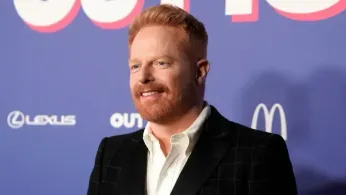
On a recent episode of his podcast “Dinner’s On Me,” actor Jesse Tyler Ferguson described an exchange with Nathan Lane that he now regards as one of the most embarrassing moments of his career, stemming from the days immediately following Robin Williams’ death in 2014. Ferguson shared the story with guest Josh Hutcherson, using it to reflect on how difficult it can be to navigate conversations about loss, even among colleagues who share queer identity and long-standing professional ties.
Williams died in 2014 by suicide, sparking a global outpouring of grief and prompting renewed public discussion of mental health, depression, and support for people experiencing suicidal ideation. In the weeks that followed, tributes came from across the entertainment industry, including from LGBTQ+ artists who had worked with Williams or been inspired by his performances and his support for diverse communities.
Ferguson explained that he and Nathan Lane were filming an episode of the ABC series “Modern Family,” in which Ferguson played Mitchell Pritchett and Lane appeared in the recurring role of Pepper Saltzman, when the subject of Williams arose not long after the actor’s death. Lane and Williams had famously co-starred together in the 1996 film “The Birdcage,” a landmark mainstream comedy centered on a gay couple and their family, which has since been widely cited as meaningful queer representation in 1990s Hollywood.
According to Ferguson, in a moment of nervousness and uncertainty about what to say, he turned to Lane and asked, “Did you know him?” referring to Williams. Lane, who had worked closely with Williams and spoken publicly over the years about their close relationship around the time of “The Birdcage,” responded in a way that made it immediately clear to Ferguson how misguided the question was. Ferguson told listeners he was mortified the instant the words left his mouth, realizing that he had effectively asked a colleague whether he knew one of his most famous co-stars.
Ferguson framed the anecdote not as a punchline at Lane’s expense, but as a self-deprecating reminder of how grief and discomfort can lead people—even experienced public figures—to say things that feel clumsy or insensitive, despite good intentions. He emphasized that he hoped the story would be heard as a humorous cautionary tale, acknowledging the awkwardness many people feel when trying to comfort someone who has lost a friend or collaborator.
Lane’s connection with Williams is rooted in “The Birdcage,” adapted from the French play “La Cage aux Folles,” in which the two actors played partners who own a drag club in South Beach. The film is often cited by LGBTQ+ commentators as a significant example of a major studio comedy that centered a gay couple’s lives and relationships, even as it reflected the limitations of mainstream representation of that era. Following Williams’ death, Lane released statements and participated in interviews describing Williams as generous, kind, and deeply supportive, underscoring the depth of their bond beyond their on-screen work.
For many LGBTQ+ viewers, the relationship between Williams’ and Lane’s characters in “The Birdcage” became an early point of connection with queer stories in a Hollywood context where out gay actors and explicitly gay narratives were less common in major studio films. Ferguson’s retelling on “Dinner’s On Me” brings that history into conversation with more recent queer visibility on television, including his own role on “Modern Family,” a series frequently credited with normalizing a married gay couple and their family life for a broad audience.
Williams’ death has remained a touchpoint in public conversations about mental health, with advocates stressing the importance of accessible support services and open dialogue around depression, especially for communities at elevated risk, including many LGBTQ+ people who face stigma, discrimination, and family rejection. While Ferguson’s story focuses on his personal embarrassment, it also implicitly recalls a moment when many queer and non-queer audiences were grieving an artist whose work and allyship resonated across generations.
By sharing the anecdote, Ferguson adds another layer to the collective memory of that period: not only the tributes and formal statements, but the small, messy human interactions that occur when people are trying, and sometimes failing, to show care. His account underlines how LGBTQ+ colleagues in entertainment often navigate overlapping histories of representation, friendship, and loss, and how they continue to talk about those experiences in public forums such as podcasts, social media, and interviews.